Everything you need to know about Slovenia
About Slovenia
Slovenia is a small country in Central Europe, bordering Italy, Austria, Hungary, and Croatia. The capital is Ljubljana. The population is around 2.1 million people. The official language is Slovene. The territory includes mountains, plains, and a narrow Adriatic coastline. The climate varies: continental in the mountains and plains, Mediterranean along the coast.
Culture
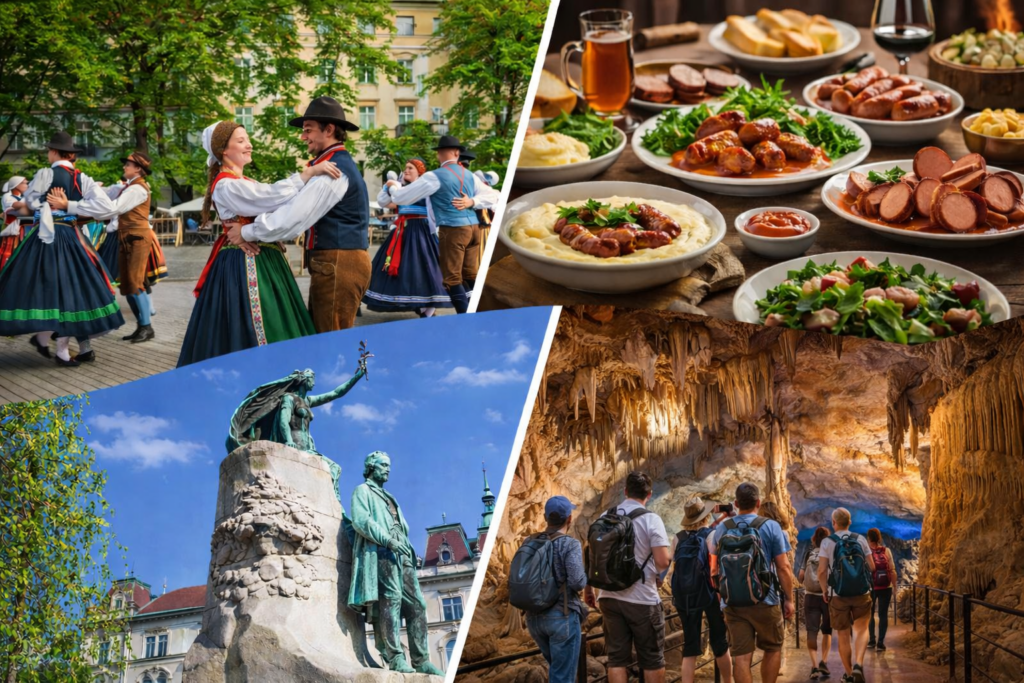
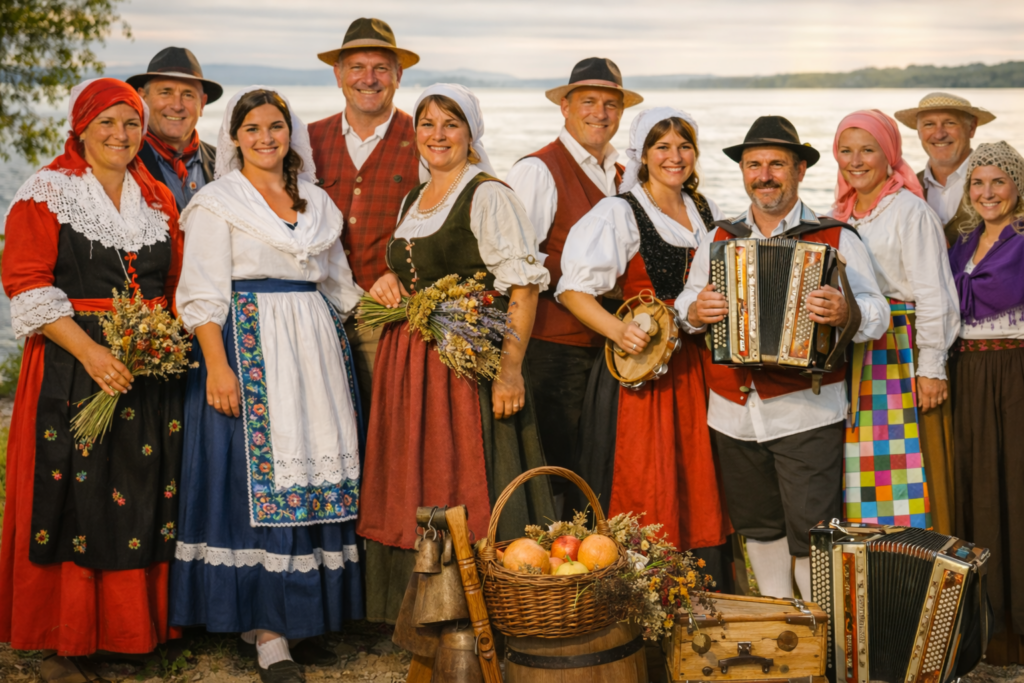
Slovenian culture combines Central European and Balkan traditions. Music, folk dances, and festivals reflect its rich heritage. Special attention is given to crafts, painting, and literature. Holidays often relate to natural cycles, harvests, and historical events.
Language
Slovene belongs to the Slavic language group and has several dialects. Interestingly, there are more than 40 dialects within a relatively small area. The alphabet is Latin, with unique letters and diacritics. The language actively preserves folk expressions and traditional words.
Famous People
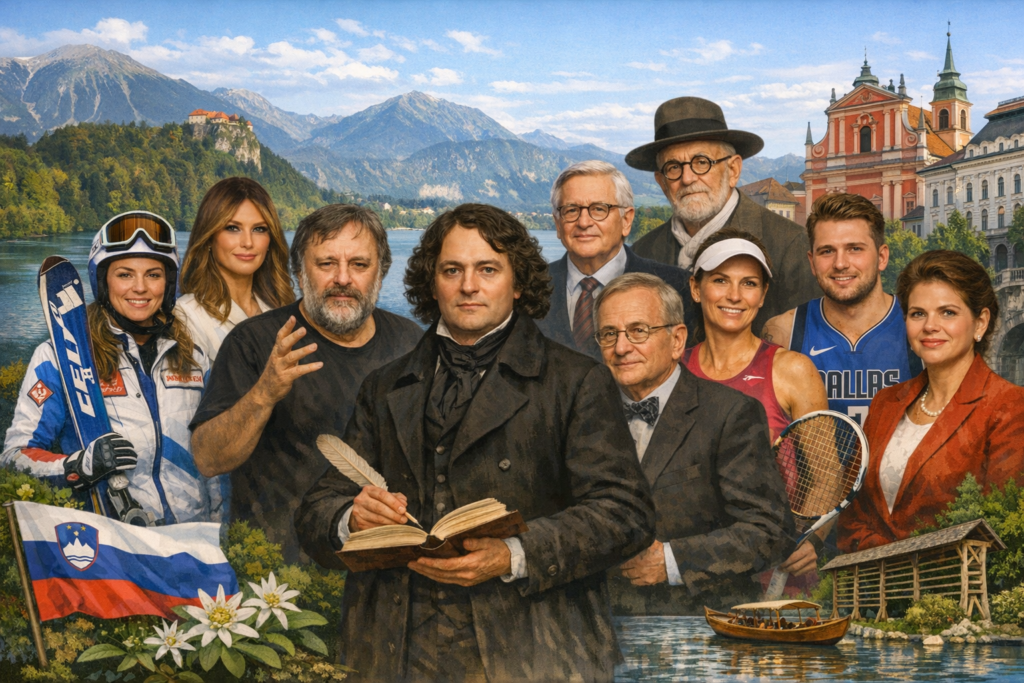
Slovenia has produced many notable figures in literature, music, sports, and science. Examples include:
- France Prešeren – national poet
- Slavoj Žižek – philosopher
- Melania Trump – former First Lady of the USA
- Tina Maze – alpine skier
- Luka Dončić – basketball player
- Alenka Bratušek – politician and former Prime Minister
- Jože Plečnik – architect
- Katarina Srebotnik – tennis player
- Andrej Bajuk – economist and politician
- Ivan Vurnik – architect
Slovenes also excel in sports such as skiing, basketball, football, and cycling. The country contributes to science and research in fields like physics, medicine, and engineering.
Cuisine
Traditional Slovenian cuisine is diverse: meat dishes, fresh cheeses, breads, and pastries. Popular meals include potato and cabbage dishes and various sausages. Sweet treats include potica (nut roll) and honey cakes. On the coast, fish and seafood are common, complemented by local wines and herbal drinks.
Nature & Tourism
Slovenia is famous for scenic lakes, rivers, mountains, and forests. Lake Bled, Triglav National Park, and the Škocjan Caves are top tourist attractions. The country is popular for hiking, cycling routes, skiing, and water sports.
History
Slovenia’s history spans Roman times, medieval duchies, the Austro-Hungarian Empire, and later Yugoslavia. In 1991, Slovenia became an independent republic. Today, it blends modern development with the preservation of historical and cultural traditions. Slovenia joined the European Union in 2004 and the Eurozone in 2007, strengthening its international ties. The country continues to develop its economy while protecting natural and cultural heritage.